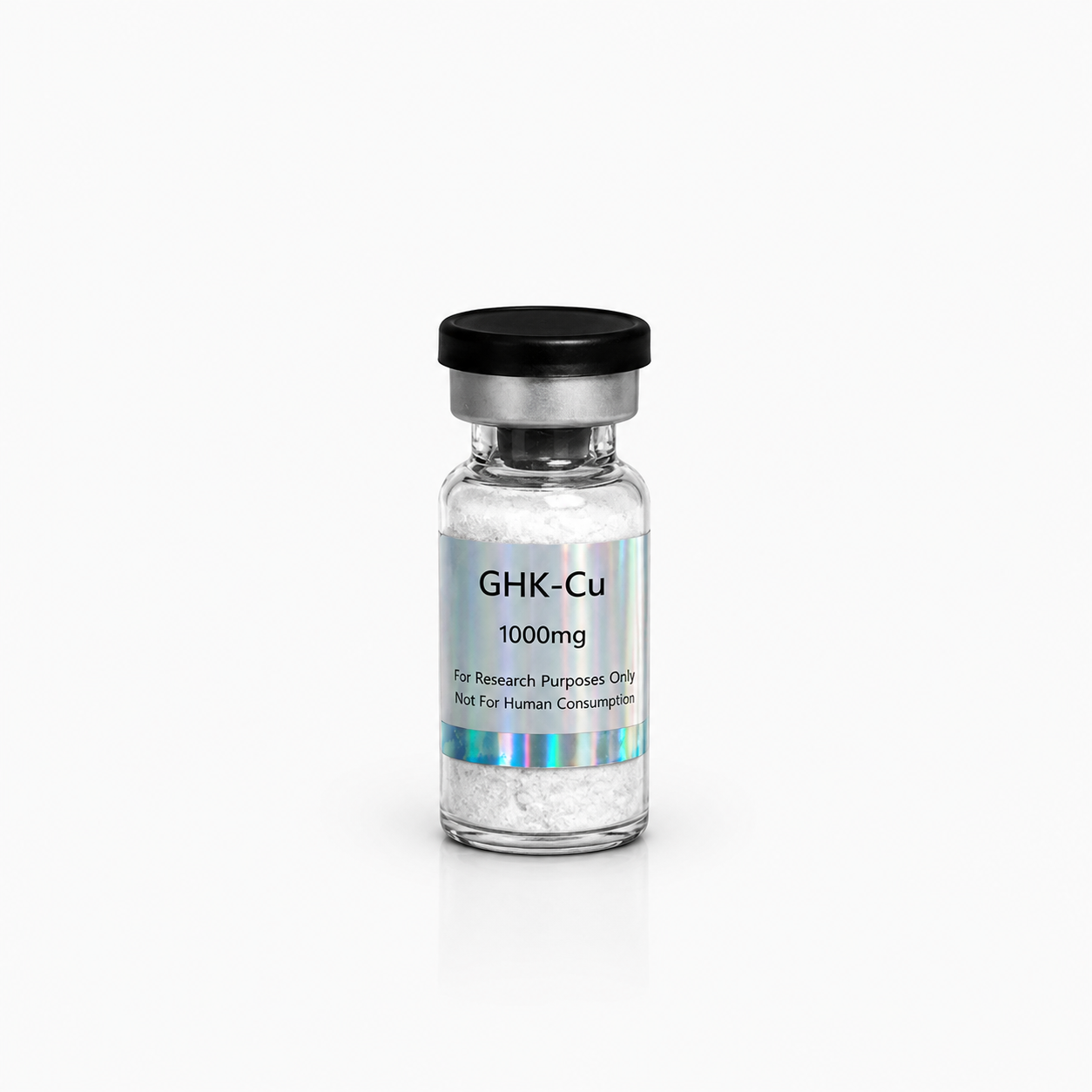
GHK-Cu (Glycyl-L-histidyl-L-lysine copper complex) is a naturally derived tripeptide bound to copper (Cu²⁺). It is widely studied in biochemistry, cell biology, and regenerative research for its role in metal ion transport, cellular signaling, and extracellular matrix dynamics.
What It Is
GHK-Cu is a copper-binding peptide complex formed when the tripeptide GHK (glycine–histidine–lysine) binds to a copper ion. It occurs naturally in biological systems and is investigated for its involvement in cellular repair mechanisms and biochemical regulation.
Chemical & Structural Properties
Peptide sequence: Gly–His–Lys
Complex: Bound to copper ion (Cu²⁺)
Molecular formula: C₁₄H₂₄N₆O₄Cu
Form: Lyophilized powder (typically blue to blue-violet in solution)
Antioxidant and oxidative stress-related mechanisms
Mechanistic Areas of Study
Research commonly focuses on:
Fibroblast activity and tissue-related pathways
Wound-healing models (in vitro / animal studies)
Angiogenesis (new blood vessel formation)
Inflammatory response modulation
Peptide–metal interaction dynamics
Laboratory & Research Applications
Used in controlled research environments for:
Cell culture experiments
Biochemical and molecular assays
Peptide–metal interaction studies
Regenerative and tissue modeling research
Analytical and experimental protocol development
Handling & Storage (Research Settings)
Store at −20°C or lower
Protect from light, heat, and moisture
Reconstitute using sterile laboratory-grade solvents or buffers
Avoid repeated freeze–thaw cycles
Follow aseptic laboratory procedures
Important Notice
This product contains 1000 mg of GHK-Cu and is intended for laboratory research purposes only. It is not for human consumption.
$65.00
5 in stock
✕
IMPORTANT LEGAL NOTICE – PLEASE READ
The products on this website are for legitimate
research use only. They are not intended to prevent,
treat, or cure any illness or disease and are not
intended for human consumption. By accessing this
site, you acknowledge that you are at least
21 years of age and have a legitimate
research basis for purchasing these products.
NOTE: All compounds are sold
individually and do not include research supplies
such as bacteriostatic water or syringes. Most products
are sold in powder form and require reconstitution
prior to research.
Creating an account confirms your acknowledgment and
age verification for site access.